An academic put trackers on homeless people to see what they could learn. Here's what they did next
Researchers are building heat maps to track how rough sleepers interact with services. It's a study that ask questions about how tech and data interacts with homelessness
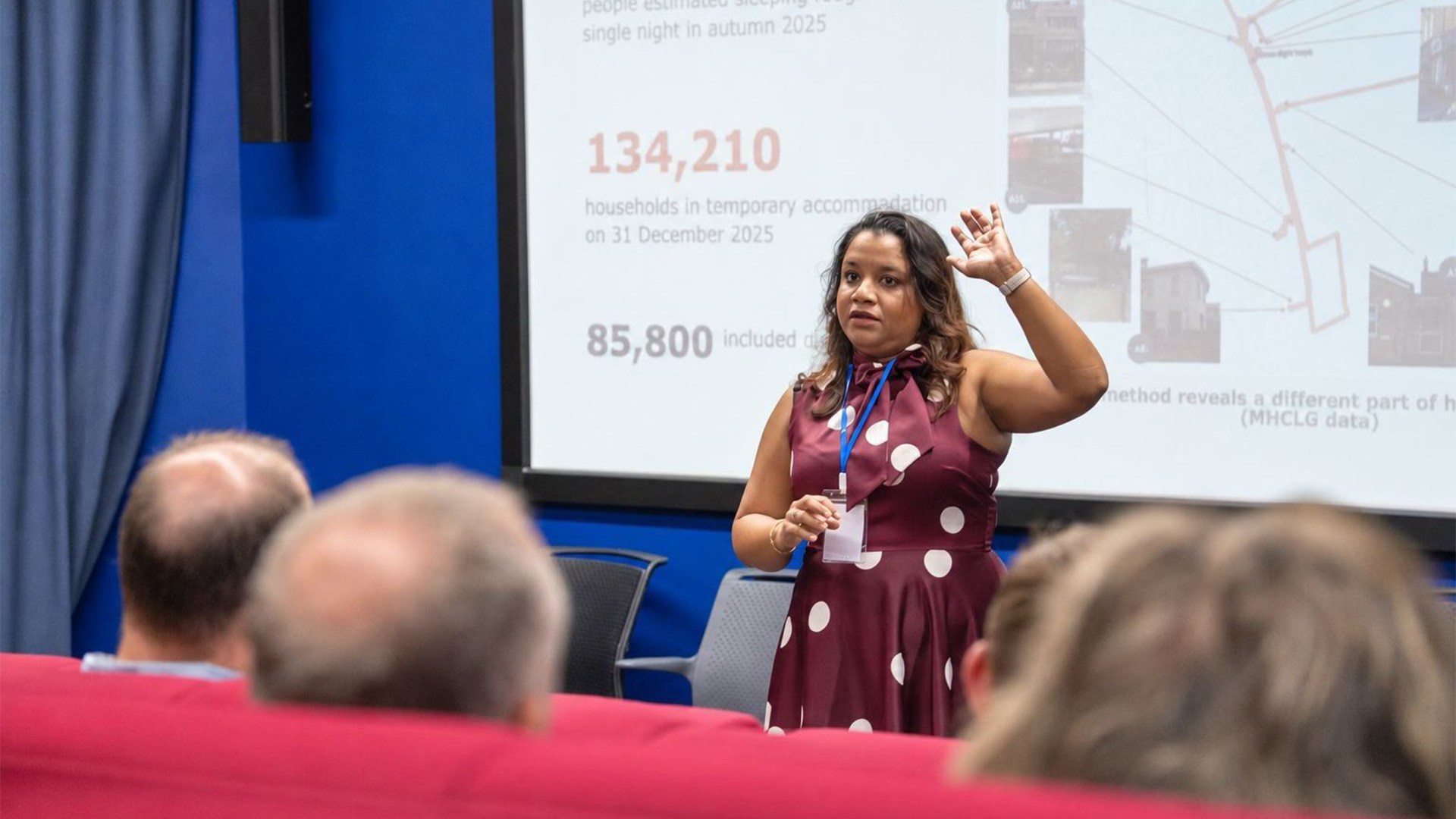
Dr Melissa Jogie, lead researcher. Image: Supplied
Share
Two years ago, academics put trackers on people experiencing homelessness in London. The unconventional study followed nine anonymised rough sleepers, mapping their movements as they spent hours searching for somewhere safe to sleep.
This sort of technology might leave you a little unsettled, but researchers say the opt-in programme helped them understand “the lived realities of urban precarity” – in other words, just how hard it is to survive when you’re sleeping rough on the street.
When the study ended, the participants handed the trackers back. But lead researcher Dr Melissa Jogie wasn’t done.
“I couldn’t put trackers on every human in south-west London,” she jokes. “So I thought there must be a better way.”
Big Issue is visiting the University of Roehampton, where Jogie is launching the second phase of her project: tracking which businesses homeless people visit to build a heat map of how they move around. The event features a few novel exhibits, including a Dungeons & Dragons-style game built on the first study’s insights, in which players roll a 20-sided dice to decide where they sleep. (Our group rolls an eight and ends up under an underpass.)
But the new digital tracking platform is the main event. Jogie has partnered with Voice for Locals, a programme that connects local businesses and shoppers through a digital loyalty ecosystem. (Think of it like a “Tesco Clubcard for all of Sutton,” says Voice for Locals founder Jay Thattai.)
Advertising helps fund Big Issue’s mission to end poverty
Advertising helps fund Big Issue’s mission to end poverty
Together they’ve built an app where people can register as homeless, with the registration validated by a partner such as Sutton Night Watch.
When it launches in Sutton in October, participating businesses will offer support – a haircut or a meal – through vouchers redeemed with a QR code. Jogie wants to eventually expand the scheme to dentists and vets.
“It’s not just a Waitrose sandwich,” she explains. “If we partner with the RSPCA, they can get a free vet check for their animal.”
Keep reading the journalism that powers our mission
Register free to continue and learn more about the stories, campaigns and the support we provide, helping people facing poverty across the UK.
But the team will keep anonymised data on where and when vouchers are redeemed, which is where the tracking comes in. The idea is to use that data to build a better picture of where people experiencing homelessness are moving and accessing support – and, eventually, to help local authorities coordinate their response.
“We are open to working with councils and with Homeless Link to help verify rough sleeping counts to start with – perhaps it might help complement CHAIN data and provide a wider story around the ecosystem of survival,” Jogie says.
Thattai pulls up a large dashboard with lines between areas where people have moved. He wants to roll the scheme out more broadly, so researchers can see how users move between boroughs.
“People move around… People in Lambeth go to Westminster, etc, because they don’t stay in one place.
“They keep moving all the time, and this is a problem for the local councils because they don’t know how much money to allocate to support homelessness in their area,” he says. “This solves that problem.”
The dashboard can show the busiest times for people seeking help, where vouchers are being redeemed and which areas the people are travelling between.
“People go from Leeds to Birmingham, they take the train, they go from Lambeth to Islington, Croydon to Merton, Sutton to Croydon,” says Thattai. “So we know which councils need to start working together.”
There is an obvious appeal to a clearer picture of a population that’s often hard to see. Jogie says that while working with Sutton Night Watch and the Centre for Homelessness Impact, she became increasingly interested in the gaps in existing research – particularly in how to record people’s experiences without repeatedly asking them to recount traumatic ones.
“I don’t want a verbal trauma,” she says. “Because how many times do you have to say what you’ve been through until that’s all you think you are?”
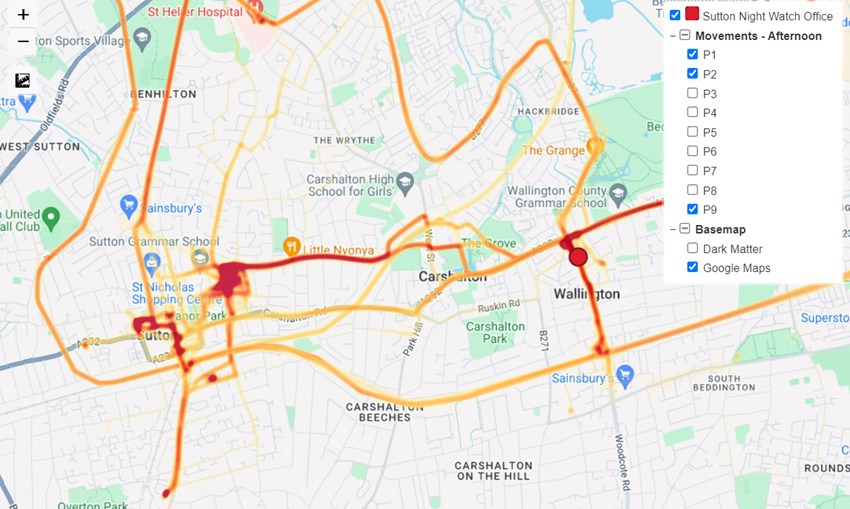
Data from the University of Roehampton’s first heat map study in Sutton. Image: Supplied
The new research builds on the “heat maps” principle of the first study but turns the observations into something homeless people can use to redeem vouchers and local authorities can use to provide support. At the launch event, the enthusiasm for what might be possible with the data was clear.
“The tech is there, AI is there, we are here… to analyse the data and come out with some fantastic statistics,” Thattai says.
There are, though, undeniable questions about what the data can actually tell us. A voucher redemption isn’t the same as a person’s movements. If someone gets a haircut in Sutton, the data tells you they went to that hairdresser, not where they spent the rest of their day, or where they slept that night. In that sense it’s less comprehensive than the first study.
It’s also less intrusive, but there are still questions about what happens when a system records patterns of movement for a vulnerable population. Where will this data go? How do you get people who are distrustful of authority or tech to sign up?
Dr Jogie insists the system is ethically safe, and that the data sits with the University of Roehampton on a secure dashboard: “We’re not tracking individuals by their name or where they’re moving,” she says. “We’re looking at just how people are interacting with the local community.”
Time will tell as to the efficacy of the mapping. But helping homeless people access free services is a good idea.
“We’re trying to get local businesses to subscribe to helping the situation,” says Dr Jogie,
“And, for the first time, we’ve got a local solution.”