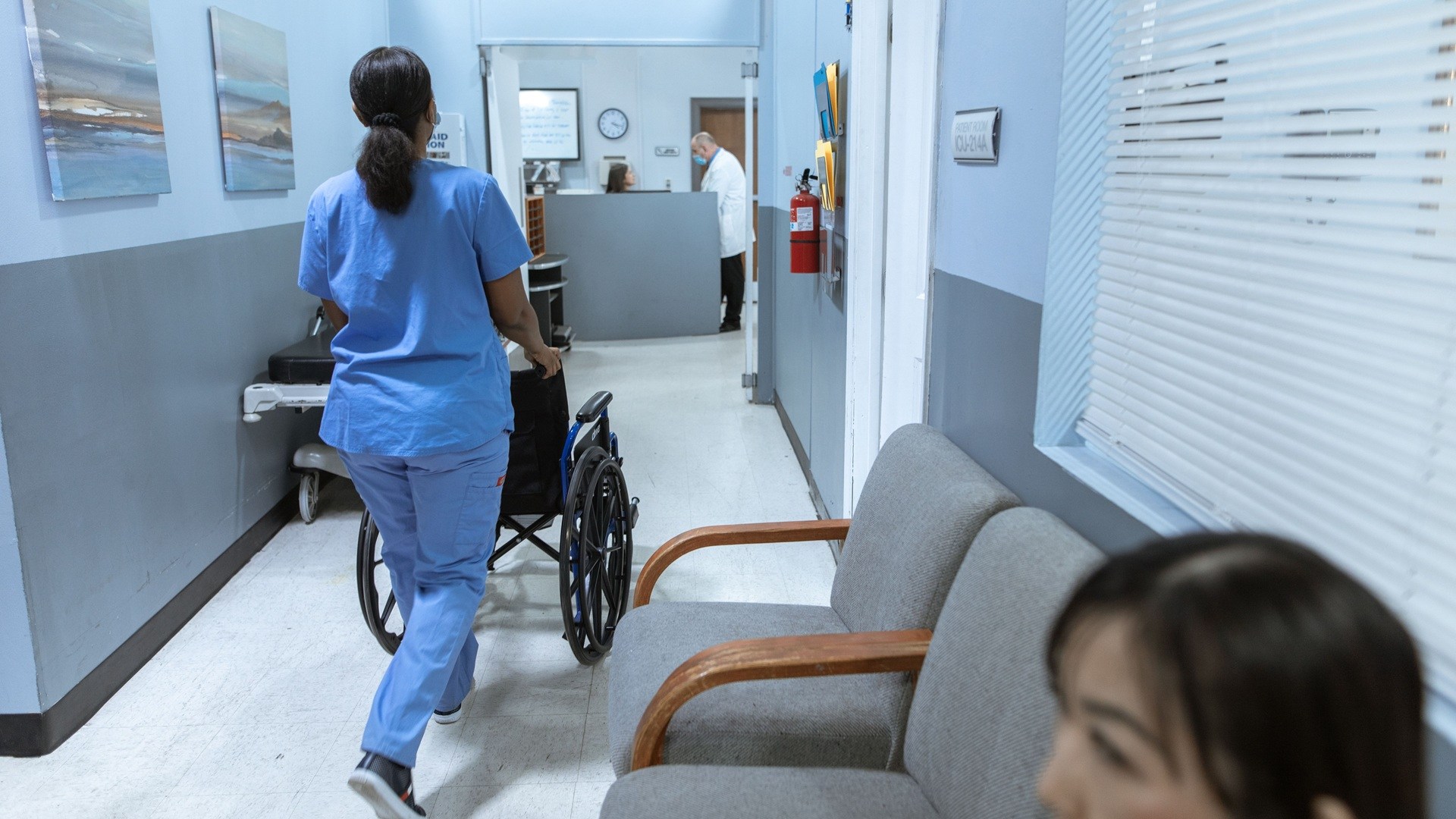
In some cases, patients were discharged from cancer wards, paediatrics departments, and intensive care units into no fixed abode.
Hospitals often do not routinely keep statistics on those in homelessness, so counting discharges to no fixed abode is considered the best indicator of the scale of the problem. No fixed abode can also include those living in institutions, or in properties such as houseboats.
Releasing somebody from the hospital to the streets can put them at risk, said Emily Page, policy officer at Pathways. Without places to wash properly, wounds are in danger of infection. Accessing medication can become difficult, and those experiencing homelessness are more likely to be managing multiple health conditions in the first place.
Keep reading the journalism that powers our mission
Register free to continue and learn more about the stories, campaigns and the support we provide, helping people facing poverty across the UK.
“What it means is that people can’t recover and they end up going back into hospital,” said Page. “It just becomes a bit of a perpetual cycle.”
Read more:
The time somebody spends in hospital can also be an opportunity. Yet that chance is often missed, said Christopher Sargeant, a GP who set up the specialist homeless healthcare service Arch in Brighton.
“What I always found when I was working there was that if people went into hospital and were homeless when they went in, they tended to be homeless when they came out,” Sergeant said. “Where there aren’t teams like that, there’s still very little that happens. Some places still have nothing and you’ll still be having the same problems.”
Typical hospital staff, said Sargeant, were adept at dealing with health emergencies but less well-versed in chronic social problems. Arch’s team get to work as soon as somebody enters hospital, rallying housing, benefits, and social services to ensure that the next step is not only thought about on the day of discharge.
Sargeant said hospitals had a vital part to play in Burnham’s fight against rough sleeping. “If you can stop those big cohorts of people coming back out to homelessness, the hospital cohort and the prison cohort, then you can do a lot to reduce the numbers of people who are sleeping on the streets,” Sergeant said.
“We should be able to do better than just open the door and let them wander out.”
The government’s homelessness strategy, published in December 2025 under Keir Starmer’s leadership, set out an ambition that “no one should leave a public institution into homelessness”. Calling it a “deeply harmful outcome” which could undermine recovery, the strategy committed to a target that nobody eligible for homelessness assistance would be discharged to the street after a hospital stay.
Amid that, the government said early identification of housing issues was vital, as was access to support post-discharge. More accommodation for those leaving hospital would also help, said Page: “Even if it’s identified that someone has housing insecurity, there just isn’t anywhere for people to be discharged if they don’t have a home.”
The lack of consistent data also made the issue harder to solve, Page added. “It becomes a very big issue when the population is essentially invisible in NHS data. People are discharged to the street without any package of support in place, which just creates that revolving door of going back to hospital,” she said.
There are also concerns that not everybody is covered by the wording of the government’s promise.
“While the government has rightly committed to ending discharge from hospital into homelessness, it is deeply concerning that this only applies to people who are legally entitled to housing support,” said the Salvation Army’s Redmore.
Under housing rules, those determined to be in ‘priority need’ are eligible for emergency support. Rough sleepers are not automatically classed as being in priority need, and those not meeting immigration criteria – such as those without recourse to public funds – are excluded.
“In reality, the majority of people sleeping rough will be excluded from emergency council accommodation because homelessness legislation does not recognise them as being in ‘priority need’, despite the fact they are destitute, even if they have been sleeping rough for years,” said Redmore.
In Wales, priority need was abolished earlier this year. Instead, all those experiencing homelessness will be eligible for assistance.
“Living on the streets is no place for anyone, least of all someone recovering from illness or surgery,” Redmore said. “Until the government reforms this outdated law, it will continue to fail vulnerable patients, undermine the work of NHS staff and waste precious NHS resources through avoidable hospital readmissions.”
Do you have a story to tell or opinions to share about this? Get in touch and tell us more.
Change a vendor’s life.
Buy from your local Big Issue vendor every week – and always take the magazine. It’s how vendors earn with dignity and move forward.
You can also support online:
Subscribe to the magazine or support our work with a monthly gift. Your support helps vendors earn, learn and thrive while strengthening our frontline services.
Thank you for standing with Big Issue vendors.