The concrete and steel already in place represent a substantial investment of embodied carbon. Demolishing them and starting again releases that carbon burden all over again before any operational savings are realised.
Reusing sound structural frames while upgrading internals, services and façades preserves that embedded carbon and delivers immediate reductions in energy demand. This approach is particularly relevant in larger, more complex buildings, where robust structures were often designed for long service lives and can support significant performance upgrades.
Modern retrofit is about far more than adding insulation or upgrading interiors. To be effective and durable, interventions must address the full range of performance demands placed on contemporary buildings. Many of the levers we can pull on converge around how a building’s external envelope performs.
Thermal efficiency, structural integrity, and airtightness are fundamental, but so too is solar gain management, ensuring buildings avoid overheating as summers become warmer. Acoustic performance is critical in denser urban environments, where noise can directly affect health and wellbeing. Durability ensures that retrofit solutions last for decades, not just a few years. For many buildings these performance demands are ultimately resolved at the façade, the critical interface between internal environment and external conditions.
Fire performance is paramount, particularly in taller residential and commercial buildings. Façade systems, materials and detailing must meet stringent fire safety requirements while working in harmony with thermal and structural upgrades. Retrofit must improve safety, not introduce new risk.
Aesthetics also matter. Buildings shape how people feel about where they live and work. Sensitive, well designed upgrades can transform tired façades, reinvigorate residential and commercial environments, and extend the relevance of existing buildings in modern cities.
Advertising helps fund Big Issue’s mission to end poverty
Regulation is rapidly catching up with reality. Energy performance standards are rising, and expectations around safety, carbon reporting and building performance are becoming more explicit. Poorly performing buildings are increasingly at risk of becoming economically and socially obsolete, harder to occupy, insure or finance.
For owners of older buildings, particularly larger assets, retrofit is becoming a necessity rather than a choice. Those who act early can protect asset value and reduce long term risk.
Delivering retrofit at scale requires a shift in how projects are planned and delivered. Modern methods of construction, including off site manufacture, allow façade systems and components to be produced with greater consistency, less waste and reduced disruption on site. This is an important consideration for occupied buildings.
Digital tools play a supporting, rather than dominant, role. 3D design and BIM (building information modelling) help teams understand existing buildings more accurately before work begins. Reality capture, scanning technologies, and thermal, acoustic and carbon modelling allow retrofit strategies to be tested and refined, reducing risk and improving outcomes.
The introduction of AI is beginning to assist in analysing complex data sets and exploring optimisation options, but its role remains an enabler rather than a replacement for engineering judgement.
Inefficient buildings cost people money, undermine comfort and contribute to poor health. Retrofit reduces energy bills, improves internal environments and makes buildings safer and more resilient. At the same time, it supports skilled employment and long term capability within the construction sector.
Advertising helps fund Big Issue’s mission to end poverty
With most of the buildings of 2050 are already standing today, the next decade will be decisive. The materials, methods and expertise already exist. What is required now is urgency and intent.
Retrofitting, and intelligently repurposing, existing buildings is not a secondary option. It is the central task if we are serious about meeting net zero targets and creating places that are safe, durable and fit for the future.
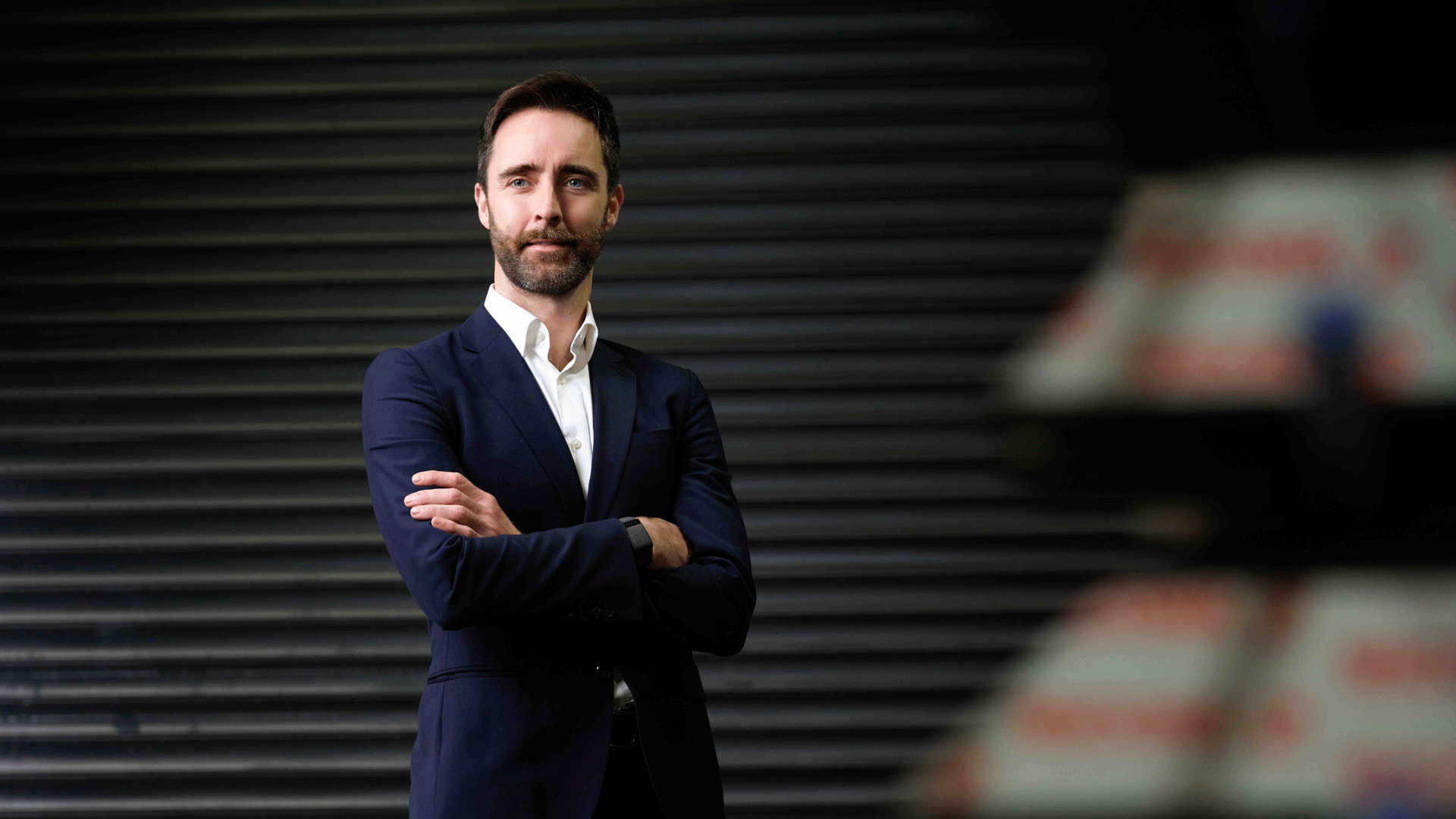
Eugene Clarke is CEO of Clarke
Do you have a story to tell or opinions to share about this? Get in touch and tell us more.
Change a vendor’s life.
Buy from your local Big Issue vendor every week – and always take the magazine. It’s how vendors earn with dignity and move forward.
Advertising helps fund Big Issue’s mission to end poverty
You can also support online:
Subscribe to the magazine or support our work with a monthly gift. Your support helps vendors earn, learn and thrive while strengthening our frontline services.
Thank you for standing with Big Issue vendors.