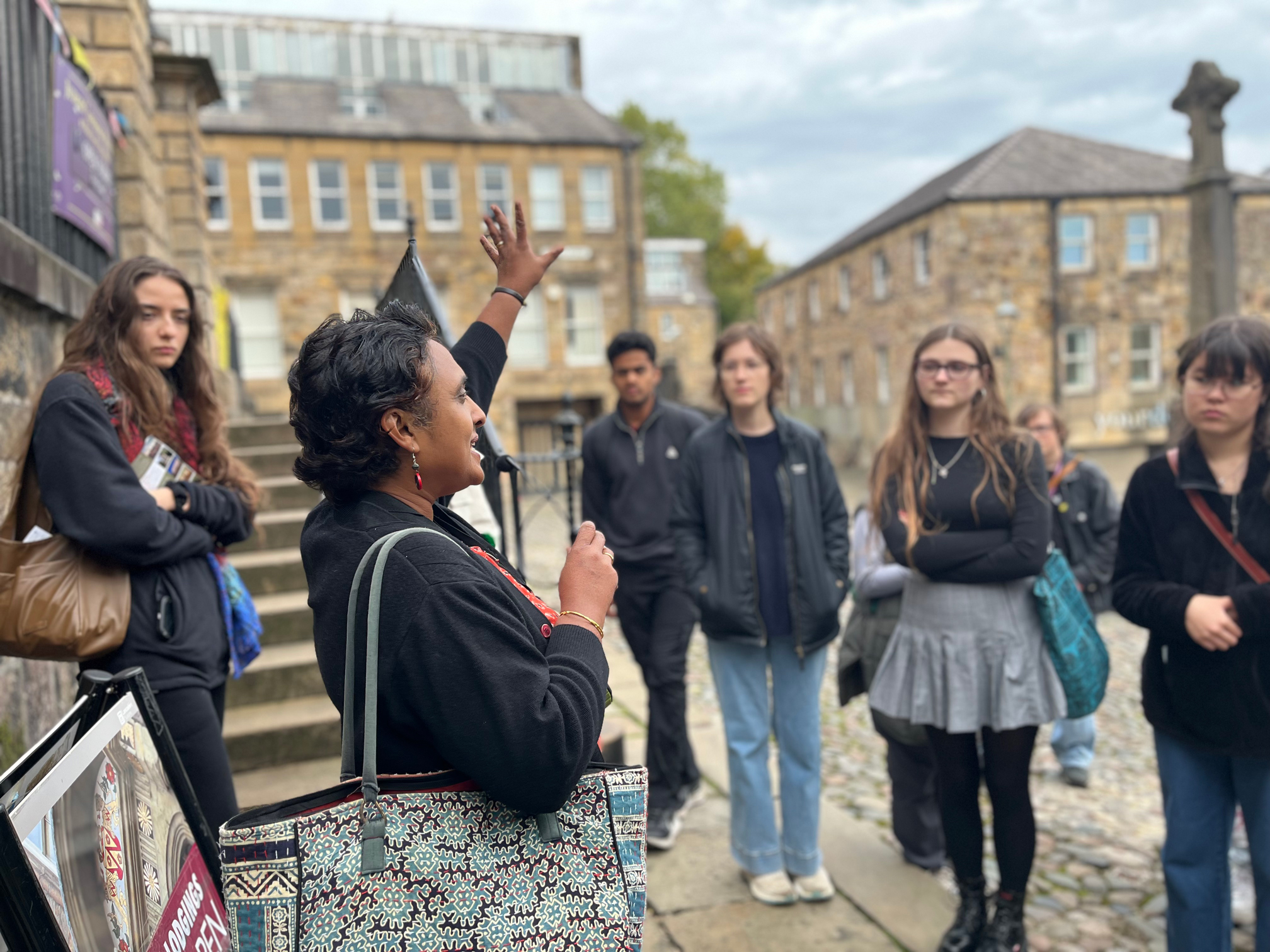
Lancaster is a pretty tranquil place. Set on the river Lune and within sight of the Lakeland fells, it can feel far removed from the culture wars dominating Westminster and social media. Look closer, though, and you’ll find signs of the same tensions. A dispute over local history, identity and belonging is playing out here silently in spray paint and stone.
Five years ago, the National Trust’s report on its historical links with colonialism and slavery sparked a nationwide re-examination of Britain’s past. In Lancaster, that wider reckoning prompted many people to lift the veil on aspects of the city’s history that lay hidden in plain sight.
Lancaster was the fourth most active British port involved in the transatlantic slave trade. Well over 100 ships set sail from here bound for west Africa during the 1700s. The wealth that brought Lancaster is still evident today, especially along St George’s Quay. Buildings like the Customs House (designed in 1764) were built on the back of commerce that dehumanised and trafficked thousands of enslaved Africans.
Read more:
- When speaking out about racism costs you everything
- ‘Are you really the doctor?’: The realities of life as a Black doctor in the NHS
- Inside the mission to make Cumbria the first anti-racist county in the UK
This difficult part of Lancaster’s history has been examined by local historians and academics. Until recently, though, it was little acknowledged. That began to change in earnest after the global Black Lives Matter movement in 2020 refocused attention on Britain’s role in historical colonialism and slavery.
That spring, the Rawlinson and Lindow monument at Lancaster Priory became a flashpoint in local debates about memory, history and identity. The Rawlinsons and Lindows were both prominent local families whose wealth was tied to the slave trade, and their monument stood in the priory churchyard for generations, largely unremarked. That changed in 2020, when someone spray-painted ‘slave trader’ across the stone.