
Advertising helps fund Big Issue’s mission to end poverty
Opinion

Why we’re creating new housing union in 2026 to help renters, residents and leaseholders take on power

With the housing crisis showing no sign of shifting in 2026, Social Housing Action Campaign’s Suz Muna explains how she’s building a new union to help ordinary people take action

a raised fist

A new housing union will bring together people living in horror homes like never before, organisers say. Image: Luis Quintero / Unsplash

Prospects on the housing crisis in 2026 are not good, but a powerful will to reshape the landscape is emerging from below. It aims to build tenant and resident power on a scale big enough to challenge government and landlords, and it offers us hope for the future.

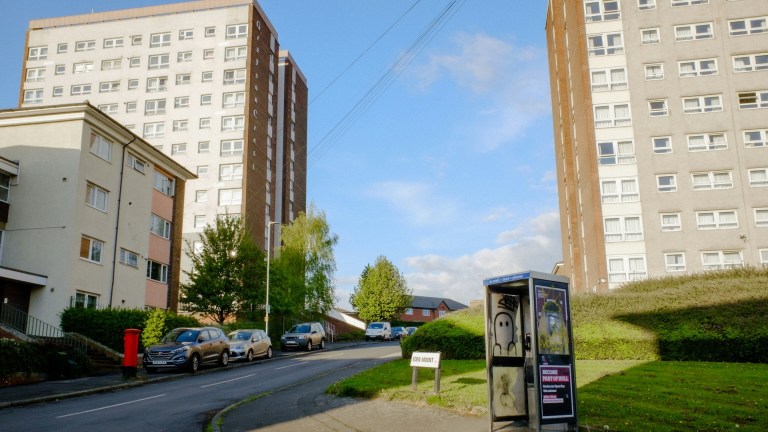
It would be easy to despair in the current landscape. There are few signs from the Labour government that they are intent on reversing the catastrophic decisions that have led us to where we are now – record numbers of people who are homeless or in insecure, unsuitable, dilapidated, overcrowded, accommodation.

Systematic financial exploitation through soaring rents and unregulated service charges. And landlords who are allowed to bully, discriminate, intimidate and otherwise act without accountability because tenant and resident protections have been weakened and enforcement systems eroded to the point of pointlessness.

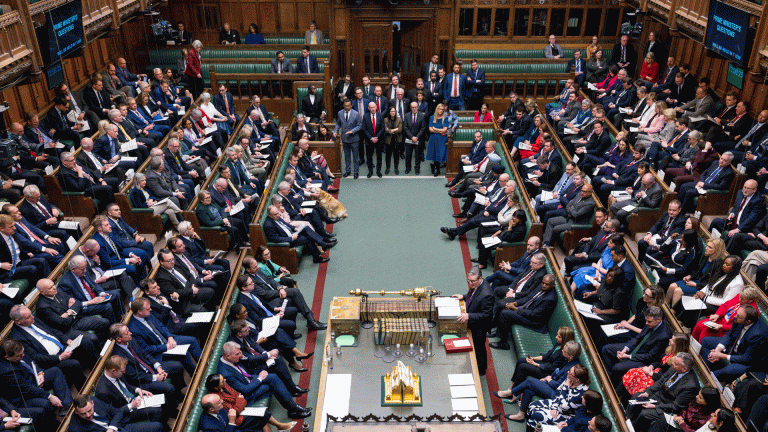
Government housing policy is little more than a numbers game, satisfied with reporting only the number of new homes without regard to whether these are genuinely affordable or designed to meet our needs. It frames the crisis as one of supply alone, when it is in fact a crisis of affordability. A fact that successive housing ministers have stubbornly refused to acknowledge. It also ignores the many other faces of tenant and resident exploitation.

The government is increasingly and willingly beholden to big developers and private corporate landlords like housing associations who just want to build as many new homes as possible. The developer’s goal is to maximise surpluses and profits, and their power is supreme because it is they, not councils, who are tasked with delivering new social housing.

Housing associations are reporting that they are now turning down applicants because they consider them too poor to afford the social housing on offer. Yet government has exacerbated the problem by capitulating to landlord demands, setting a formula for raising social rents by CPI plus 1%, for the next decade. All this will do is bring social rents closer to private market rents. A move in the wrong direction.

Advertising helps fund Big Issue’s mission to end poverty

There was one small victory in the form of the Renters’ Rights Act bringing the end of ‘no-fault’ evictions, but it’s a very small step. Conversely, the improvements heralded in the Leasehold Reform Bill have faltered in the face of freeholder resistance.

When Awaab’s Law was introduced, we were told that it would force improvements by requiring social landlords to make repairs within set timescales. But private landlords were exempted, and nothing was done to close the enforcement gap. This law remains a dead letter for the majority of those who might otherwise have benefitted from its provisions.

Decades of complex legislative and social changes have reversed the post-war political commitment to ensuring that working class people have access to good housing. During this time, power has seeped away from tenants and residents because we have lacked a coordinated tenant and resident movement. But this is what is finally showing signs of developing.

People have waited in vain for successive governments to do better on housing. And all the time, landlords and developers continued lobbying to remove the ‘burdens’ that obliged them to deliver the desperately needed, genuinely affordable public housing in exchange for the millions of pounds granted to them from the public purse.

As council funding was squeezed, local authorities sold off their remaining council housing, and shut down the many varied forms of tenancy and homelessness support that aided those who needed extra help to live a stable life.

Read more:

Advertising helps fund Big Issue’s mission to end poverty

In the absence of a coordinated tenant and resident movement, developers, landlords, and managing agencies, were abetted by rightward-shifting government housing policy and were able to act almost completely unchallenged, but for the efforts of a cluster of dedicated housing activists and campaign groups who refused to relinquish the belief that it doesn’t have to be like this.

Now, there is a mood to build tenant and resident power through the formation of a national, democratic housing union. Helping to lay its foundations has been Social Housing Action Campaign’s (SHAC) most important call to action. Through scores of conversations with tenant and resident organisations and activists, and in consultation with our members, we held a conference in October to begin the work of turning the vision into reality. It is a collective acknowledgement that tenants and residents must change the fundamental, systemic, and structural issues that lie at the heart of our housing problems.

Our new taskforce to deliver the housing union begins its work early in the new year. Like a trade union, such a body would support tenants and residents with individual casework, but also empower estate-level campaigning. It will advocate for legislative and political policy changes that favour tenants and residents, not landlords, and it will provide an alternative narrative to the media which is more tenant and resident focussed.

The union is needed to unite renters, shared owners, and leaseholders, whether their landlords are councils, housing associations, or private companies. And while the founding conference was hosted by SHAC, the initiative is collectively owned by a taskforce formed of a wide variety of campaign partners, activists, and individual tenants and residents.

The housing union project will seek its primary support and partnership not from landlords or government who have failed the working class so badly on housing, but from the trade unions who have both the funding and reach to take it onto a mass scale. Find out more and get involved at https://shaction.org/a-national-housing-union/.  

Suzanne Muna is secretary of the Social Housing Action Campaign

Advertising helps fund Big Issue’s mission to end poverty

Do you have a story to tell or opinions to share about this? Get in touch and tell us more

Reader-funded since 1991 – Big Issue brings you trustworthy journalism that drives real change.

Every day, our journalists dig deeper, speaking up for those society overlooks.

Could you help us keep doing this vital work? Support our journalism from £5 a month.

Advertising helps fund Big Issue’s mission to end poverty

GIVE A GIFT THAT CHANGES A VENDOR'S LIFE THIS CHRISTMAS 🎁

For £36.99, help a vendor stay warm, earn an extra £520, and build a better future.
Grant, vendor

Recommended for you

View all
Disabled people faced a politically tumultuous 2025. What does next year have in store?
Disabled sign
Mikey Erhardt

Disabled people faced a politically tumultuous 2025. What does next year have in store?

Our leaders must listen to scientists on climate change – or catastrophe is around the corner
Mark Wright

Our leaders must listen to scientists on climate change – or catastrophe is around the corner

The message that non-white people are unwelcome in the UK got louder in 2025 – here's the proof
protesters surround a police van
Siddharth Venkataramakrishnan

The message that non-white people are unwelcome in the UK got louder in 2025 – here's the proof

We need a stepchange in how we deal with homelessness in 2026 so society can heal
Jess Turtle

We need a stepchange in how we deal with homelessness in 2026 so society can heal