Advertising helps fund Big Issue’s mission to end poverty
Opinion

Arts education is not an add-on for SEND education. It is the missing piece

A pilot project in Barking and Dagenham is proving the importance of arts education for children and young people with special educational needs

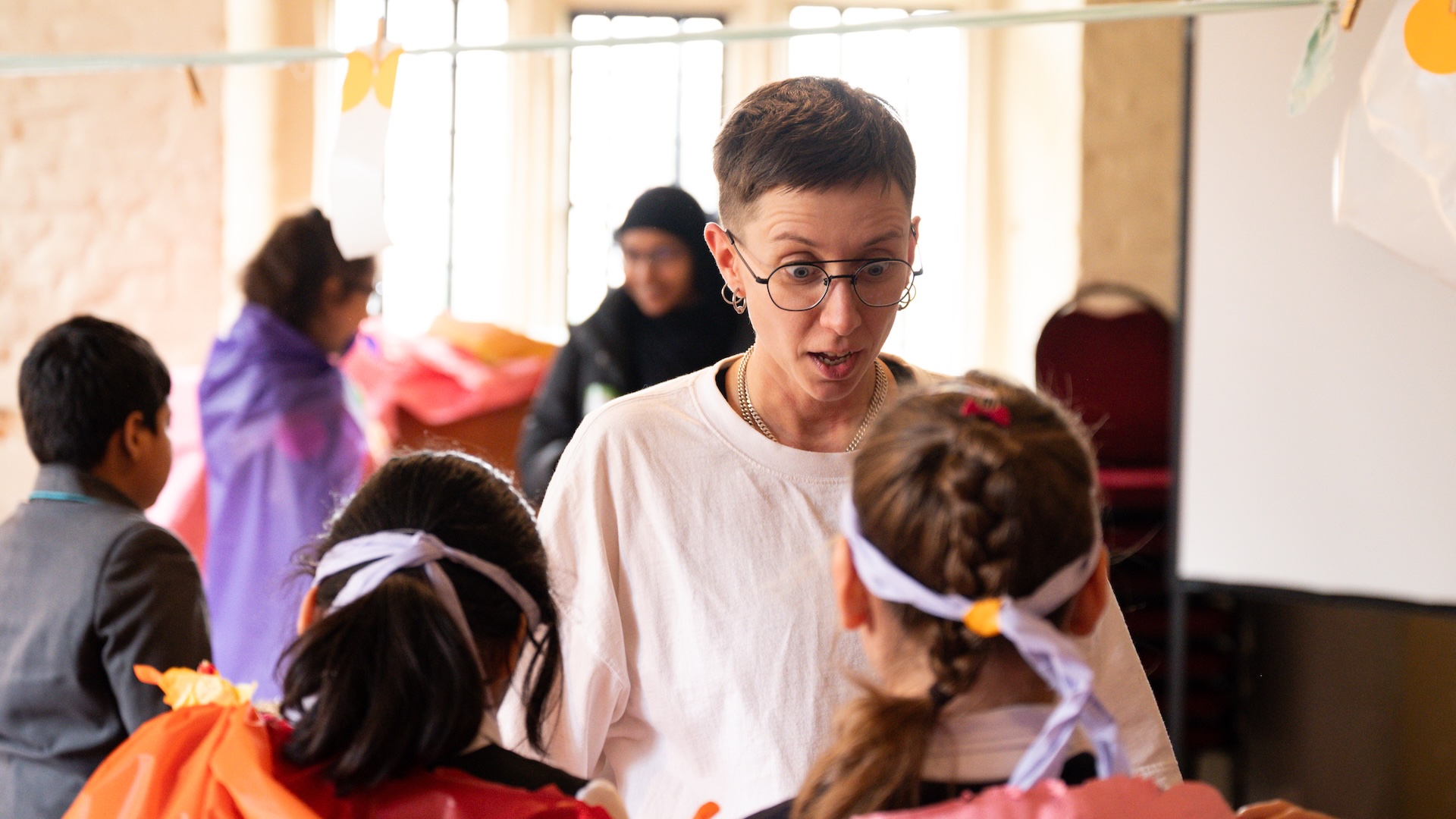
teacher with kids doing drama

The arts can help kids with SEND thrive. Image: J.Lee-Eastbury Conference.

The arts are often treated as an afterthought in education, something nice to have, something optional, something that can be trimmed away when budgets tighten. But what if the arts aren’t an add-on at all? What if they are the missing piece, especially for those with the least access?

That question sat at the heart of a year-long creative curriculum project delivered by Inspiring Futures, Barking and Dagenham’s cultural education partnership. Backed by Arts Council England as one of only eight national research pilots, the project set out to test something deceptively simple: can drama, sensory arts and creative practice genuinely transform learning for young people with special educational needs and difficulties (SEND)? The answer was yes, but only if we expand, experiment and evolve. We need a curriculum built around real children, not assumptions.


The project began with a clear finding that arts education is often underdeveloped in the SEND curriculum due to a lack of teacher confidence, as well a lack of focus on the value of the creative journey for SEND young people. This wasn’t about reluctance, it was about teachers working under intense pressure, doing their best with limited time, space and resources.

Three East London schools joined the project to investigate how to meaningfully adapt arts education for SEND environments. Prior to involvement, each school had made thoughtful choices to support their pupils: one kept classrooms intentionally bare to avoid sensory overload; another paused drama because it felt too unpredictable for their cohort; a third was navigating a rapidly growing SEND population. What united them was not what they lacked, but their willingness to try to bring arts to some of our most vulnerable children.

To begin the project, two local artists, Kate Hopewell and Gail Egbeson, were placed in residence for two days a week. They shadowed teachers, observed routines, and built trust before co-designing a creative curriculum that blended teachers’ SEND expertise with artists’ craft. Slowly, things began to shift.

The early weeks were gentle. One child refused to touch glue. Another avoided creative activities entirely.

Advertising helps fund Big Issue’s mission to end poverty

Teachers were understandably cautious about sensory play. So, the artists started small: salt dough, simple painting, one‑to‑one sessions, quiet observation.

Read more:

Then came the breakthroughs. A child who once recoiled from messy play began dipping her hands into paint with careful joy. Another who avoided group work started choosing materials independently. By the end of the term, every child had created a personalised diorama, their own tiny world reflecting their interests and identity.

In the second school, the project expanded into drama and sensory storytelling. The Very Busy Spider became a maths lesson using clay legs for counting. Later, children “healed” Humpty Dumpty through role play, dressing up and problem‑solving together. Teachers who once worried drama might overwhelm their pupils saw the opposite: communication, confidence, emotional regulation and play. Drama wasn’t a standalone subject; it became a way into learning.

And the project didn’t just change pupils. It changed adults too. Initial hesitation around whole‑staff arts training melted away as results emerged. Two twilight sessions led to schoolwide adoption of creative strategies. As one teacher put it: “With bespoke training, we feel happier teaching the arts to SEND young people.”

Expectations shifted. Children were no longer seen as too fragile for creativity or too anxious for drama. They were seen as capable, and they proved it.

Advertising helps fund Big Issue’s mission to end poverty

The boldest moment came when a specialist high‑needs SEND school staged a Shakespeare play. The children couldn’t memorise lines, so they recorded phrases like “Hubble, bubble, toil and trouble,” which were woven into an audio track. Children created scenery and sensory‑supportive costumes, and an immersive performance was born. More than 100 people, peers, councillors, parents and teachers attended. What had once seemed impossible became a triumph of adaptation, creativity and belief.

The project’s recommendations are bold but grounded.

SEND teachers need hard‑skill continuing professional development (CPD), not generic arts training. Creative curricula must be hyperlocal, reflecting pupils’ needs and cultural backgrounds. External artists are not a luxury, they are essential partners in upskilling staff. Above all, SEND young people deserve creative learning that values the journey, not just the final performance.

The legacy is already visible: schools requesting more artist residencies, teachers embedding creative practice into core subjects, and pupils running towards art activities, not away from them.

The child who wouldn’t touch glue at the start was the first to sit down at every creative activity by the end. And one school that had paused drama entirely staged a Shakespeare play led by their highest‑needs pupils.

That’s what happens when you give SEND young people the arts education they’ve always deserved.

Advertising helps fund Big Issue’s mission to end poverty

Lizzie Kitto is a development officer at Inspiring Futures, the London Borough of Barking and Dagenham.

Do you have a story to tell or opinions to share about this? Get in touch and tell us more

Change a vendor’s life.

Buy from your local Big Issue vendor every week – and always take the magazine. It’s how vendors earn with dignity and move forward.

You can also support online:
Subscribe to the magazine or support our work with a monthly gift. Your support helps vendors earn, learn and thrive while strengthening our frontline services.

Thank you for standing with Big Issue vendors.

Advertising helps fund Big Issue’s mission to end poverty

Do you know how Big Issue 'really' works?

Watch this simple explanation.

Recommended for you

View all
Five ways to support autistic people on Autistic Pride Day
Scrabble pieces reading autism in two hands
Alexis Quinn

Five ways to support autistic people on Autistic Pride Day

'As a frontline homelessness worker, I know that pets can be just as vulnerable as their owners'
a black dog
Mark Handford

'As a frontline homelessness worker, I know that pets can be just as vulnerable as their owners'

I'm a transgender Ukrainian refugee. This Pride we must fight for the rights of LGBTQ+ asylum seekers
Ayman Eckford
Ayman Eckford

I'm a transgender Ukrainian refugee. This Pride we must fight for the rights of LGBTQ+ asylum seekers

Young people are facing a NEET crisis. We cannot let them be plunged into a debt crisis too
young people walking together
Vikki Brownridge

Young people are facing a NEET crisis. We cannot let them be plunged into a debt crisis too