“It has shown its commitment to improving children’s lives by abolishing the two-child limit in universal credit which will make an immediate and material difference to children in families who were at a much higher risk of hardship. It is the single most effective policy decision it could have taken to lift significant numbers of children out of poverty.”
Barnardo’s chief executive Lynn Perry described the end of the two-child limit as a “landmark moment”.
Meanwhile, Phillip Anderson, of the National Children’s Bureau, called it a “welcome centrepiece for the strategy” and said that “trying to punish parents by sabotaging their children’s life chances was always indefensible”.
Ministers dragged their feet with it. One of the first moves of the new Labour government was to suspend seven rebel MPs who voted for an SNP motion to scrap the two-child limit on benefits.
Keir Starmer and his colleagues claimed they wanted to lift the two-child limit on benefits but it was an expensive move and they had to find the funds for it.
Then the government became wrapped up in controversy over its plans to slash disability benefits, which would have generated billions but plunged thousands into poverty. It is likely the forced U-turn led to delays with the child poverty strategy as the chancellor had to find funds elsewhere.
Advertising helps fund Big Issue’s mission to end poverty
Scrapping the two-child limit will cost the government an estimated £3 billion annually by 2030, but Rachel Reeves has said this is “fully costed”.
Besides, keeping children trapped in poverty also costs the government. It was set to cost the country around £40bn by 2027, according to estimates from the Women’s Budget Group.
Dr Philip Goodwin, chief executive officer of the UNICEF UK said: “Ending the two-child limit and today’s child poverty strategy marks a turning point for children and struggling families in the UK. For the first time in nearly a decade, tackling child poverty is firmly back on the national agenda as a priority for ambitious action. This will improve life for millions of children.”
Although it dithered on the two-child limit and the publication of the strategy, the government wasn’t sitting on its hands when it came to child poverty. It has expanded free school meals to all children in families claiming universal credit, and rolled out free breakfast clubs across the country.
It invested £500 million in children’s development through the roll out of Best Start Family Hubs, where families can access a range of information and practical support through a child’s early years. And it introduced a £1bn crisis support package, which the government claims will ensure “the poorest don’t go hungry in the holidays”.
There are new measures in the strategy: the government has laid out plans to help families afford baby formula, for example. It also set out support to stop the “unlawful” placement of families in bed and breakfasts beyond the six-week limit.
Advertising helps fund Big Issue’s mission to end poverty
And from next year, the government will make it easier for new parents on universal credit to return to work by extending eligibility for upfront childcare costs for those returning from parental leave. Families on universal credit will also be able to get support with childcare costs for all their children.
Sarah Ronan, executive director of the Early Education and Childcare Coalition, said: “We are delighted to see the government recognise that access to affordable childcare is essential in tackling the scourge of child poverty, and we welcome today’s landmark strategy.
“The combination of measures set out today from welfare reform to family hubs and breakfast clubs will ensure that we are wrapping support around the most vulnerable families at the earliest opportunity.”
Schmuecker agrees, saying the strategy “rightly highlights the role childcare plays in tackling poverty as well as the terrible impact living in temporary accommodation has on children and families”.
“Making childcare more accessible to families on universal credit and reducing the need for temporary accommodation, alongside boosting family incomes through our social security system, will mean more children have the healthy, happy childhood that all children deserve,” Schmuecker said.
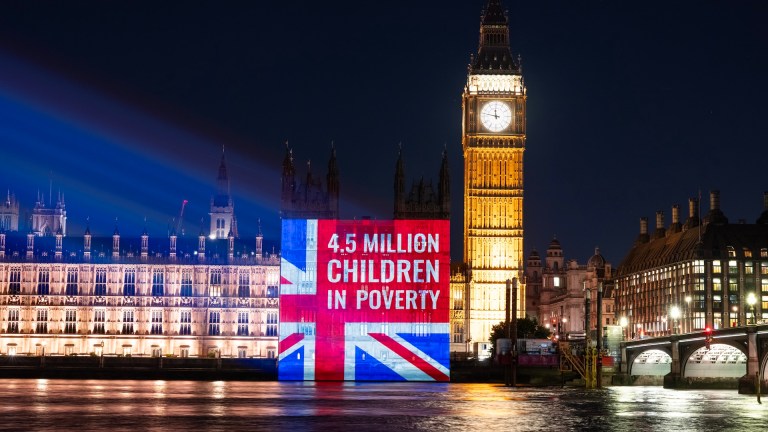
The response to the strategy has largely been positive from the anti-poverty sector, but there are warnings too. A record 4.5 million children are living in poverty in the UK. That’s one in three children.
Advertising helps fund Big Issue’s mission to end poverty
That means that there will still be nearly four million children facing poverty by the end of this parliament, when the government will face a general election, unless further action is taken.
There were measures that the government could have taken as part of the child poverty strategy which it did not choose to proceed with, such as an end to the benefit cap, which is different to the two-child limit. It caps the financial support people are able to receive and has a particular impact on larger families.
The Child Poverty Action Group (CPAG) estimated that 50,000 children could have been immediately lifted out of poverty and 250,000 would be in less deep poverty if the government had ended that cap.
Another measure people had called for were targets to end child poverty. Big Issue led on this campaign, with the backing of 67 charities and campaigners, calling for legal targets so that the government would have to hold itself accountable on alleviating poverty.
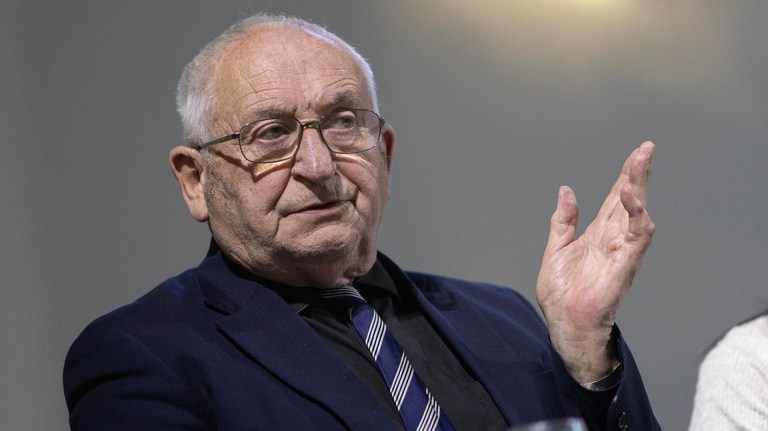
Big Issue founder Lord John Bird called the child poverty strategy a “disappointing continuation of the old Westminster folly of trying to drive seismic structural change with small-scale projects and initiatives”.
Bird said he “wholeheartedly commends Labour’s choice to lift the punitive two-child benefit cap and reverse the wrongs of their predecessors” but that “the absence of ambitious targets to propel forward this government’s mission to reduce child poverty is deeply concerning”.
Advertising helps fund Big Issue’s mission to end poverty
“In this challenging economic climate, there is every reason to worry warm words will not translate into tangible progress,” Bird said.
Big Issue will continue its calls for child poverty targets, with Bird retabling an amendment to the Children’s Wellbeing and Schools Bill in the new year.
So, was the child poverty strategy worth the wait? Any policy which has the effect of lifting thousands of children out of hardship and deprivation can only be positive.
When children are given a better start in life, they have more opportunities to thrive – in education and when they go into the workforce in the future. In the long-term, this is vital to a strong economy.
But is there still work to be done as millions of children remain trapped in poverty? Absolutely.
Do you have a story to tell or opinions to share about this? Get in touch and tell us more.
Advertising helps fund Big Issue’s mission to end poverty
Change a vendor’s life this Christmas.
Buy from your local Big Issue vendor every week – or support online with a vendor support kit or a subscription – and help people work their way out of poverty with dignity.