Advertising helps fund Big Issue’s mission to end poverty
Social Justice

How the fight for common land is now the fight for access to the internet

Peasants thrived on common land until landowners stole it all. There is an obvious parallel with what's going on today onlinr

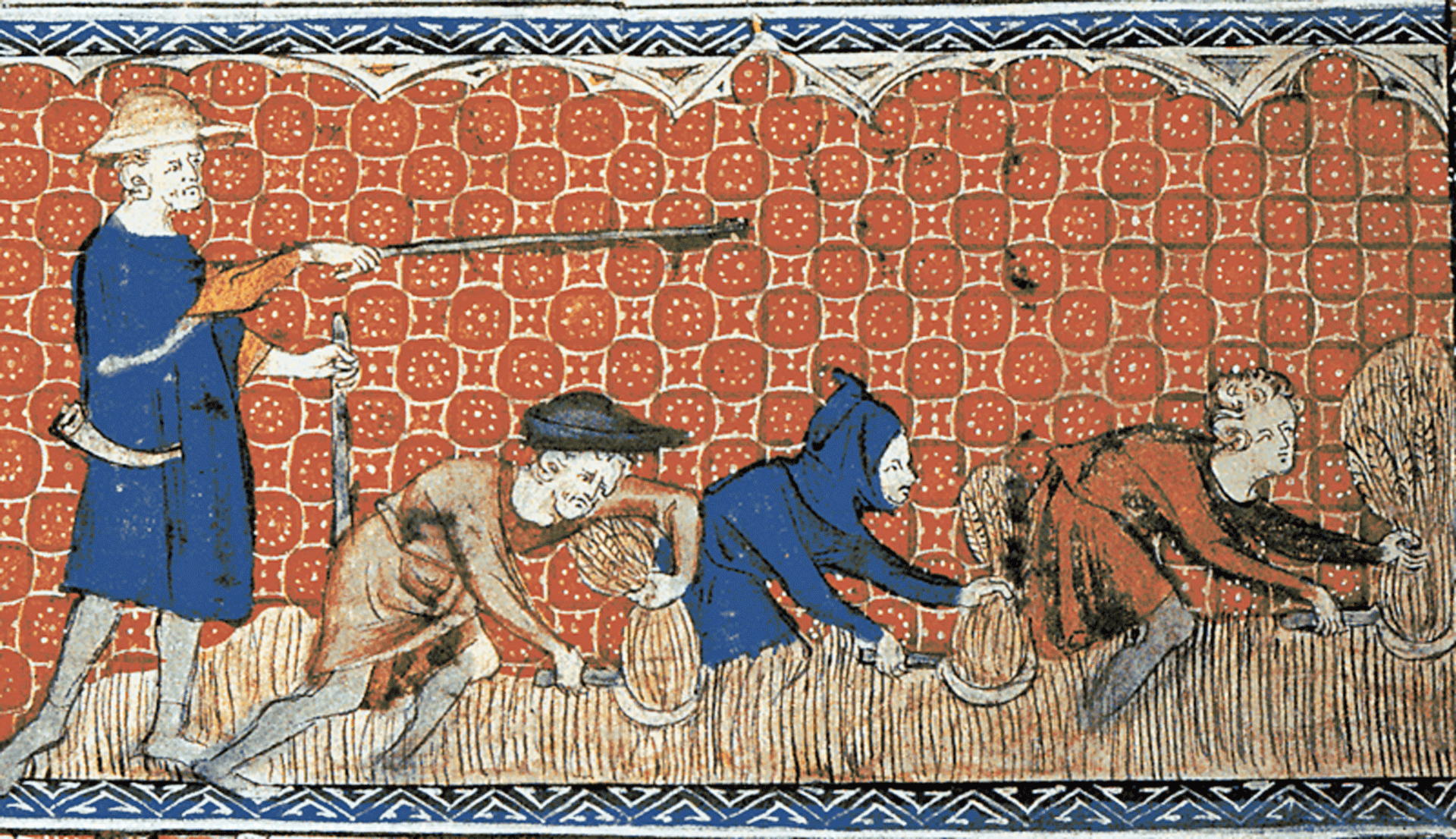
Agricultural land in England was enclosed as early as the 13th century. This is a Medieval illustration of men harvesting wheat

Agricultural land in England was enclosed as early as the 13th century. This is a Medieval illustration of men harvesting wheat. Image: anonymous (Queen Mary Master), Wikimedia Commons

Hundreds of years ago, English villages farmed open fields and grazed animals on common land. In order to know who used which strip or who had the right to gather wood and cut peat you had to be a part of the community that used it.

Under the guise of agricultural efficiency, the already-landed gentry pushed through acts of parliament that allowed them to take legal ownership of the common land. These acts were known as the ‘inclosures’ and formed the basis of the horrendously inequitable land ownership we experience today in modern Britain.  

There are striking parallels in the modern age. We, the world’s digital villagers, once had free and open access to information on the World Wide Web. Anyone could publish or access information, and the protocols that governed its flow between the servers, routers and switches paid no heed to sender or recipient. People published things that they thought others would benefit from, and consumed what they needed.

The technology rapidly improved, as did the reach of these tools. Before long, one did not need to be from the technical community to publish or consume the information on the web, you just needed a login to a free platform. The number of users began to skyrocket.


Under the guise of efficiency and the as-yet unratified benefit of ‘connecting everyone’, these platforms began to consolidate their dominant position and enclose the services they provided. They created vast data-processing empires built upon another digital commons and generated some of the largest profit margins in the history of capitalism. It wasn’t long before people began to ape the platforms that harnessed them. Everything was content.

Raw physical experience was there to be captured and uploaded to further feed the machine, both to train it and guide us in our decision making. The digital had come back around to re-enclose the physical. 
Advertising helps fund Big Issue’s mission to end poverty

Now, in the age of artificial intelligence, the enclosure has moved to a higher layer of abstraction. The sum total of human knowledge, culture and experience is the target. By enclosing everything, these new structures can not only sell it back to us in a more convenient form as an intelligent agent, but mediate and direct every aspect of activity on Earth and beyond. Again, there is some truth in the promise.

As enclosing fields did make mass agriculture more efficient, platforms also made publishing possible for billions. AI may, in turn, make knowledge easier to wield. The question is not whether these systems create certain efficiencies, the question is, for whom, and at what cost?  

Read more:

There is an obvious difference to the common land parcels divided up by the barons of the 1600s. Data can be copied, land cannot. The defence of the digital commons cannot rest on the idea of what data has been ‘taken’. The more important question is what happens when the spaces we use to communicate, work and create are enclosed by systems that observe, predict direct and monetise us.  

It is not all doom and gloom. Projects such as Wikipedia, Signal and Proton are doing a fantastic job here of pushing back, but there is much more to do. Upholding our rights to the digital commons will absolutely have implications for efficiency, but this is probably a price worth paying.

Do you have a story to tell or opinions to share about this? Get in touch and tell us more

Change a vendor’s life.

Buy from your local Big Issue vendor every week – and always take the magazine. It’s how vendors earn with dignity and move forward.

You can also support online:
Subscribe to the magazine or support our work with a monthly gift. Your support helps vendors earn, learn and thrive while strengthening our frontline services.

Thank you for standing with Big Issue vendors.

Advertising helps fund Big Issue’s mission to end poverty

Do you know how Big Issue 'really' works?

Watch this simple explanation.

Recommended for you

View all
'I left my abuser – and then the family court gave him custody of my children'
Lady Justice
Family courts

'I left my abuser – and then the family court gave him custody of my children'

Why Big Issue vendors are giving away free books: 'Reading is the world'
Big Issue vendor Andre Rostant
Reader offer

Why Big Issue vendors are giving away free books: 'Reading is the world'

What's going on with the Timms Review of PIP? Here's how to have your say
stephen timms
Benefits

What's going on with the Timms Review of PIP? Here's how to have your say

'I probably would have given my son up without help from a baby bank. No one else supported me'
silhouette of a pregnant woman
Homelessness

'I probably would have given my son up without help from a baby bank. No one else supported me'