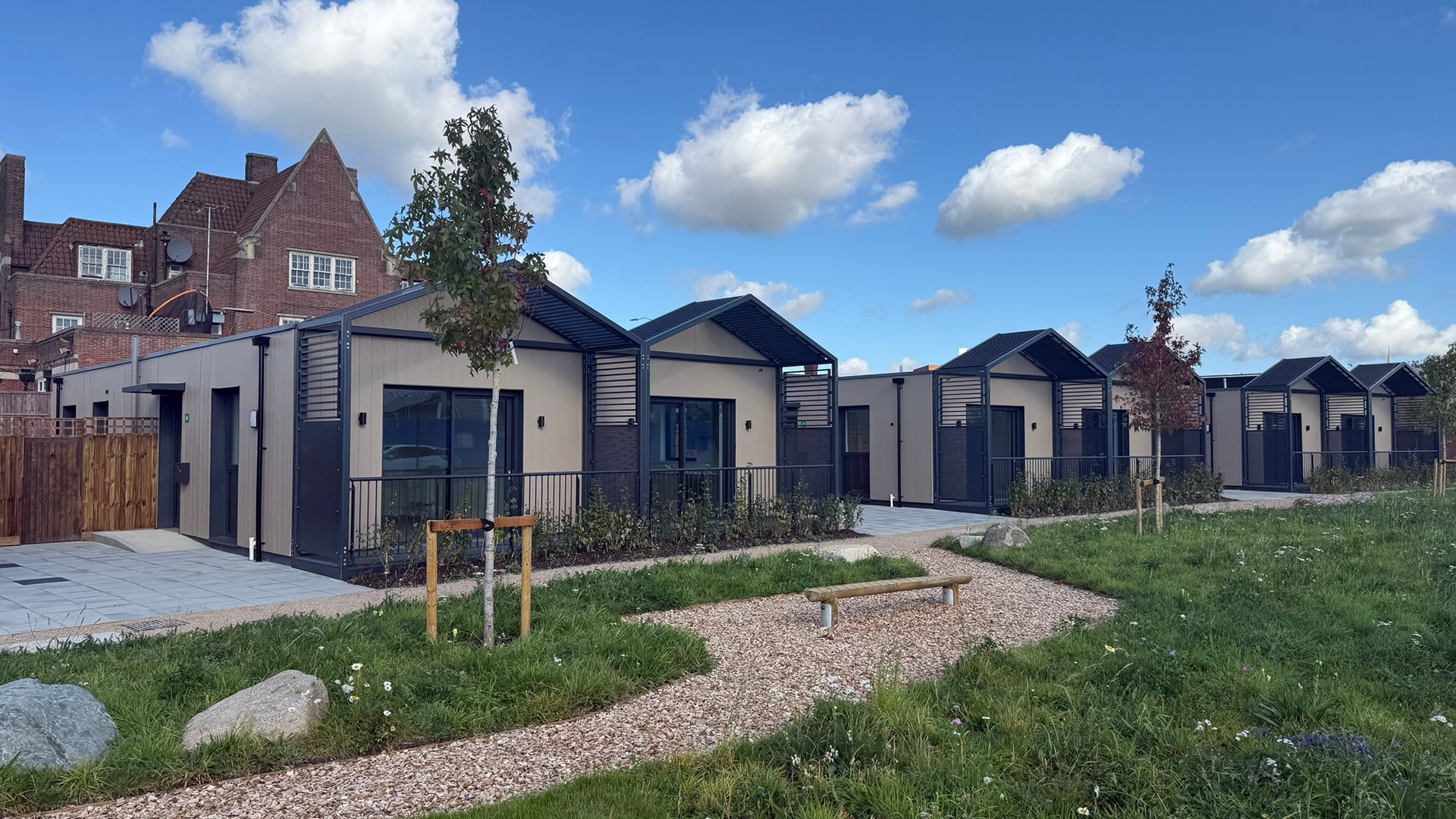
On a cleared regeneration site in Havering, 18 modular homes – built off site and assembled in place – now stand on land that could have sat empty, waiting for redevelopment. New regulations meant that the original scheme planned for the site was delayed due to planning and viability issues. Working together, Wates and Havering Council found another way. Instead of leaving the land idle, they put it to use temporarily, and people are starting to move in. “We want to build homes for people to live in,” says Pip Prongué, executive managing director of Wates Residential.
Eighteen homes, however, won’t touch the sides. At the end of March, a record 135,580 households in England were in temporary accommodation, including 177,530 children. The government has promised £39 billion for affordable and social homes over 10 years, with a target of 1.5 million new homes this parliament, and ministers and London’s City Hall have moved to streamline planning. Prongué, who oversees multiple development projects, backs the ambition but has concerns. “£39bn is great. It’s so welcome. But is it going to be enough to deliver what [the government] actually wants to deliver?” she says. “Schemes aren’t [financially] viable at the moment, and speeding up planning alone isn’t going to make it happen. Once you’ve got planning, it can often take a year to sign a Section 106 agreement. It shouldn’t take a year.”
A Section 106 agreement is the legally binding deal between developer and council covering obligations like affordable housing and local infrastructure. Planning itself hasn’t got any lighter either: in 1991, Prongué says, the average application ran to 120 pages. Today it’s 3,271. That’s a lot of red tape. Grant funding doesn’t cover the full cost of affordable homes, so schemes rely on private sales alongside them – which only works if the market is strong. “The reason people aren’t building houses is because nobody’s buying them,” Prongué says.
Housing has become too political. Big infrastructure is planned years in advance. Housing is never seen that way
She wants housing planned like roads and power stations. “Housing has become too political,” she says. “Big infrastructure is planned years in advance, as part of the growth plan for the country. Housing is never seen that way. Give people somewhere to live – somewhere safe, somewhere warm – and they’ll go forward and thrive.”
Wates Residential builds in partnership with councils and housing associations. “Regeneration is too complex for any one person or organisation to do on their own,” Prongué says. “Local authorities and housing associations bring the land, the local knowledge and the long-term vision. The private sector brings the investment and the delivery expertise.”
Havering shows why. New building regulations require a second staircase in residential buildings over 18 metres. The scheme might have been exempt at the time, but the partners knew the building needs to be fit for the long term. Rather than treat this as a reason for a delay, the partnership turned the cleared site into homes.