Birmingham bin workers’ strike, one year on: Inside the forgotten neighbourhoods lined with rubbish
On the day marking one year since refuse collectors went on strike in Birmingham, Big Issue headed to the neighbourhoods hit hardest by rubbish left in the wake of the industrial dispute
by: Josh Sandiford
13 Mar 2026
Birmingham City Council has organised intermittent collections during the strike but piles of rubbish have become part of daily life in the city. Image: Josh Sandiford
Share
Birmingham’s Palace Road doesn’t really live up to its name.
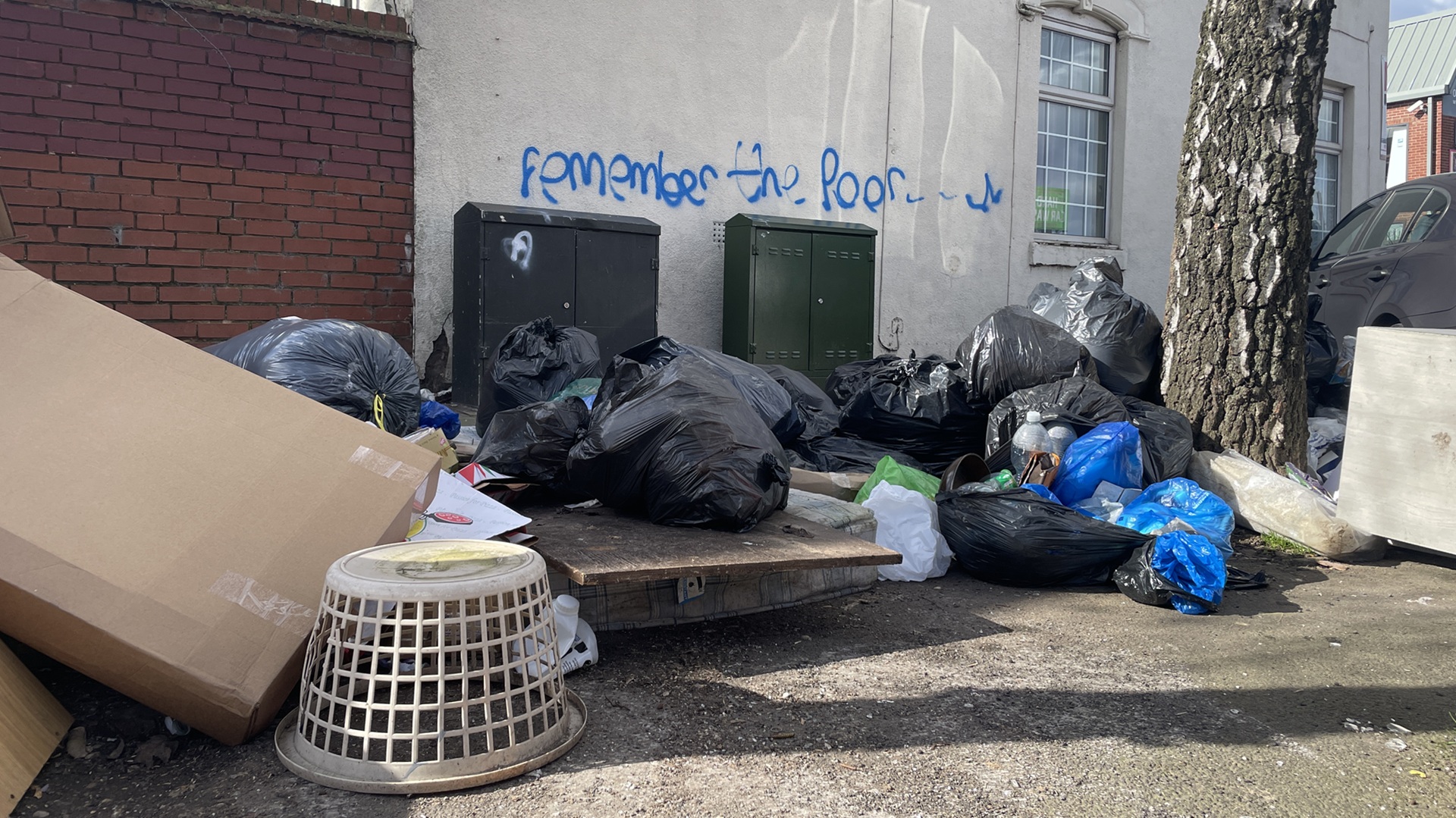
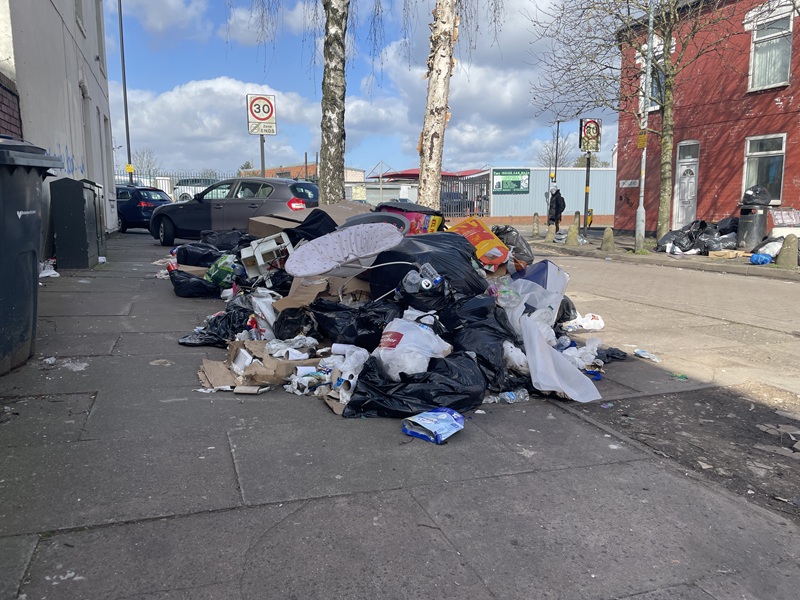
An acidic stench lingered in the air, rising from two dumped piles of rubbish on the pavement. Flies buzzed around packaging and a baby’s high chair, both perched on top of a dozen bin bags. Nearby, an empty milk bottle rolled and echoed down the street.
Perhaps more shocking was the residents walking past with bags of shopping, getting on with daily life without breaking stride.
Those I spoke to said the area was clear just days ago before fly-tippers struck yet again. Here, rubbish is a part of daily life made worse by 12 months of a bitter industrial dispute.
Rubbish has piled up in parts of Birmingham already experiencing inequality, like Small Heath. Image: Josh Sandiford
“This is the typical disparity that exists in Birmingham,” said Shafaq Hussain. “The inner-city areas have been neglected. It’s two worlds, really, that we live in.”
We were in an area called Small Heath. It is one of the city’s most deprived and 94% of people are from an ethnic minority background.
Advertising helps fund Big Issue’s mission to end poverty
Advertising helps fund Big Issue’s mission to end poverty
Hussain, who has lived in the neighbourhood for all of his life, was acting as my tour guide for the day. In his upmarket electric car, he drove me around streets he could have left behind had it not been for a love of his community.
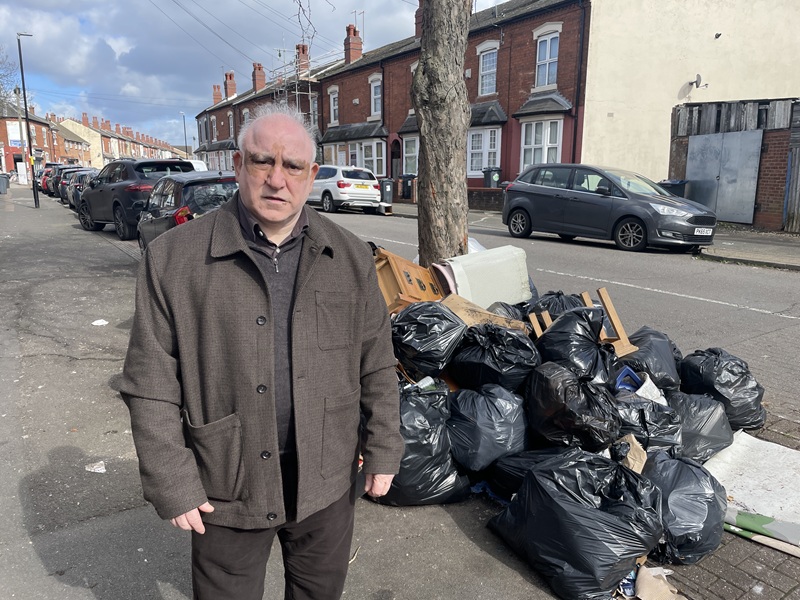
End the Bin Strike campaigner Shafaq Hussain. Image: Josh Sandiford
A softly-spoken senior youth worker by day, he doubles up as chair of the End Bin Strike Campaign. As we drove around he stopped to chat to people in Kurdish, shaking hands and gathering views on the dispute that has left him furious.
“People are staying up all night because of the rats rattling behind the cupboards,” he said.
“At one point we went to see a woman with disabilities and her care workers were not willing to touch the rubbish she had.
“There were maggots and dead mice in there.”
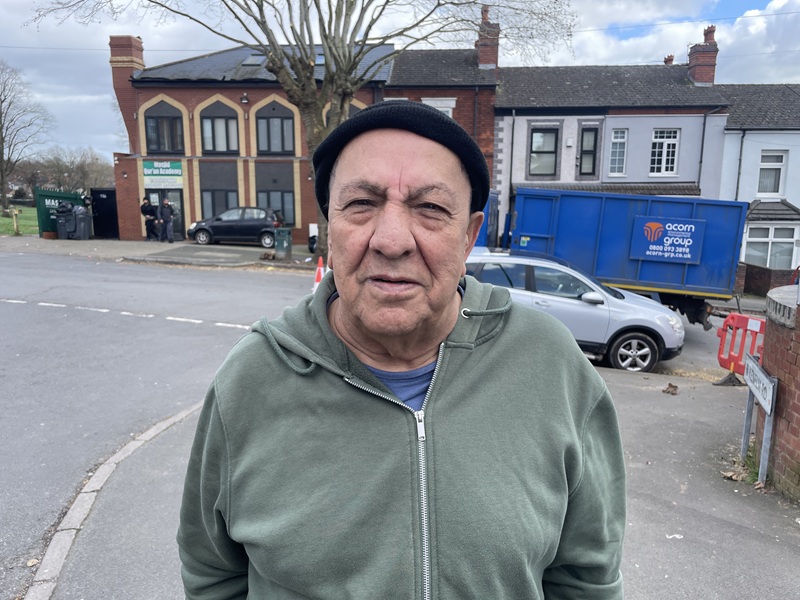
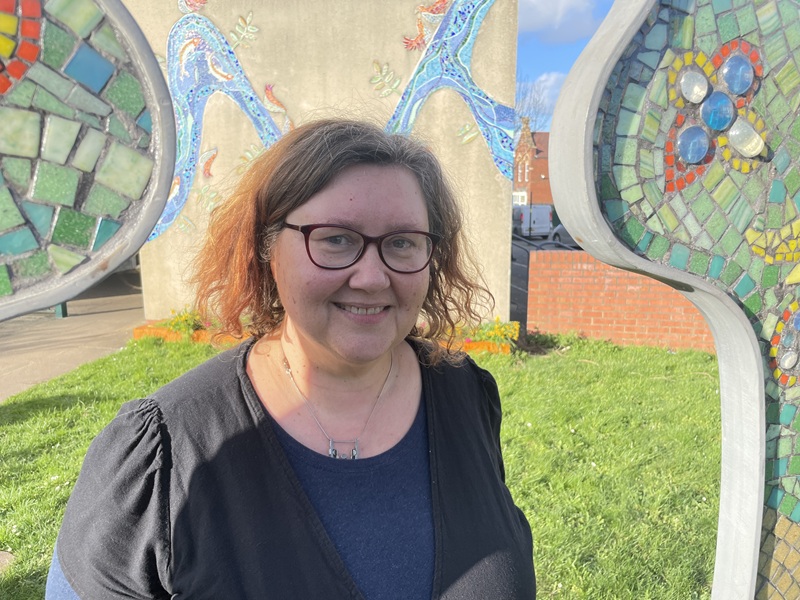
Akhtar Khan. Image: Josh Sandiford
On a neighbouring street, Akhtar Khan told me he had lived in Small Heath for more than 50 years.
Advertising helps fund Big Issue’s mission to end poverty
The 69-year-old is semi-retired and said the “once beautiful” area was now a “dump” that had left him too embarrassed to invite guests.
“I’ve seen them, they’re bigger than me,” he said of the rats. “They’re not frightened of me, I’m frightened of them.”
For Khan, the bins are just the latest in a long line of failures.
“You’ve got more chance of seeing King Charles than the doctor nowadays.”
Birmingham’s bin strike has become one of the longest and most intractable industrial rows of modern times.
Advertising helps fund Big Issue’s mission to end poverty
Workers from Unite walked out over Birmingham City Council plans to “transform” the service. The union says the changes will leave members thousands of pounds worse off and has also accused the authority of “fire and rehire” tactics.
While recycling hasn’t been collected since at least January last year, the council has secured intermittent collections of general waste through agency staff.
The same residents stuck in the middle of the strike have seen council tax ramped up by 21% over two years. In 2023, Birmingham effectively declared itself bankrupt, unable to balance its books after years of mismanagement.
The irony is that the role at the centre of this dispute was itself created to resolve Birmingham’s last bin strike in 2017. The council says the position now has to go because it risks creating fresh equal pay liabilities. It is those same liabilities that are a major cause of the city’s financial crisis.
Putting all of this together, it’s hard not to present a bleak picture of the UK’s second city. One food bank manager declined to be interviewed for this piece, saying he was tired of stories about his area always telling a tale of poverty and deprivation.
In Sparkhill, about two miles from Small Heath, the Springfield Project is trying to tell a different one. The charity runs nurseries, holiday schemes and support services for thousands of families every year.
Advertising helps fund Big Issue’s mission to end poverty
When I visited at the end of a busy day, children’s paintings lined the walls and kids spilled noisily out of the door.
Sarah Robbins, the charity’s CEO, said she had sympathy for an “underfunded” council faced with difficult decisions over how to manage the bin strike in areas like hers.
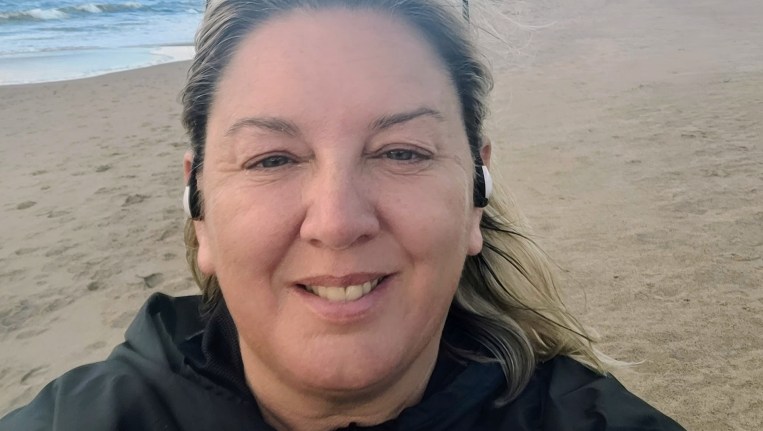
The Springfield Project CEO Sarah Robbins. Image: Josh Sandiford
She told me demand for her services was growing all the time but the community was “thriving in lots of ways” despite high levels of poverty.
“The residents of Birmingham and Sparkhill in particular need to be proud about the things that are worth being proud about, including their ability to survive in the face of adversity,” she said.
“But also those with power to make decisions that affect our communities need to know that some of our communities feel very much left behind, not invested in, and not cared about.”
Birmingham might face a unique set of problems, but it is far from the only place where people feel public services aren’t working for them.
Advertising helps fund Big Issue’s mission to end poverty
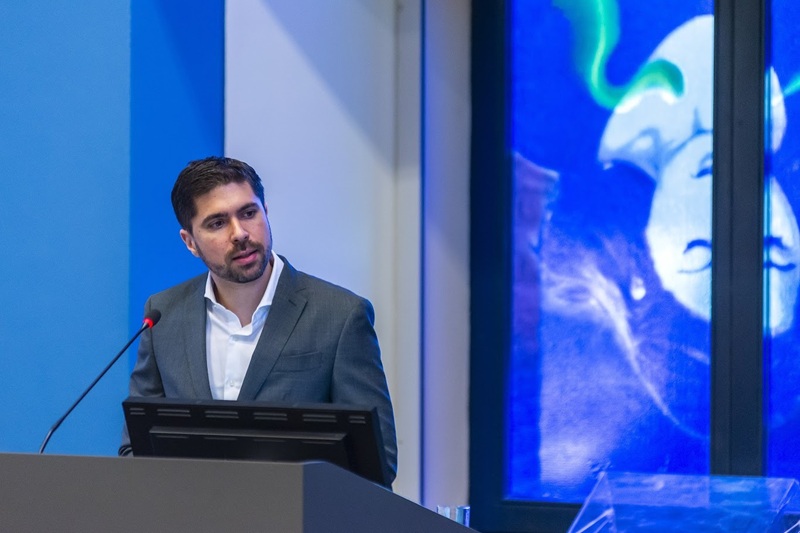
Dr Danilo Spinola, a senior lecturer in economics at Birmingham City University, said austerity-era central government cuts were continuing to wreak havoc with what councils could actually provide.
He explained the bin strike was something other parts of the country should take note of, as workers could walk out elsewhere if cuts continued.
Birmingham City University’s Dr Danilo Spinola. Image: Supplied
“It is part of a wider structural problem in how local government in the UK is funded,” he said.
“When basic services break down, the effects are felt most strongly in already deprived neighbourhoods.”
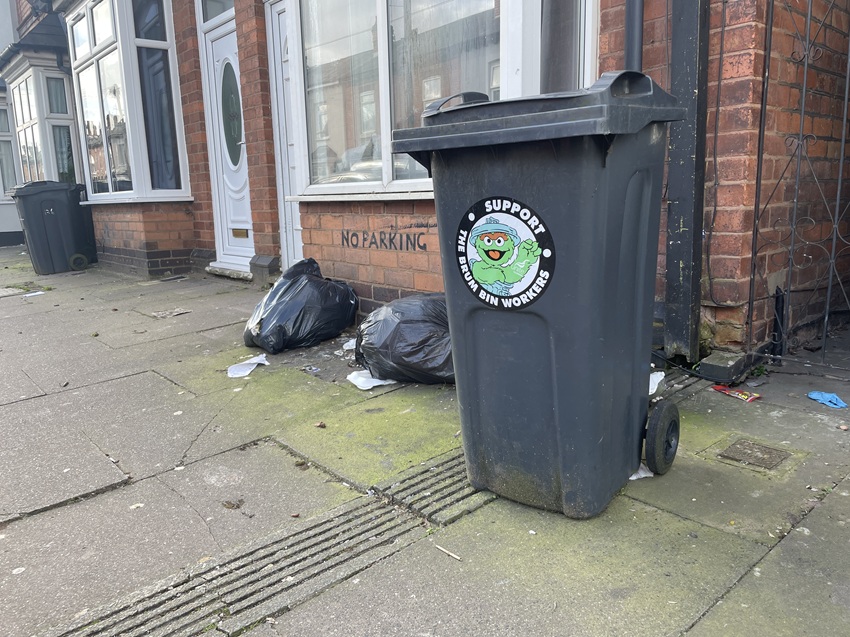
Back in the car with Hussain we drove through a street on which almost every bin had a “support the Brum bin workers” sign. It wasn’t far from where he claimed home secretary and Birmingham Ladywood MP Shabana Mahmood used to live.
Advertising helps fund Big Issue’s mission to end poverty
As we spoke, he demanded to know why central government was yet to intervene: “Why are they solving other people’s problems around the country and around the world [but have] not been able to solve something at their doorstep?”
“Support the Brum bin workers” signs have popped up on bins in Birmingham. Image: Josh Sandiford
Ministers have urged all parties to bring the dispute to an end, but there are few signs of this happening and indications it could impact more than just May’s local elections.
On the one year anniversary, Unite cited the bin strike as its reason for cutting its affiliation fee to Labour. It is a move that will cost the governing party £580,000 a year from one of its biggest donors.
“Workers are scratching their heads asking whose side are Labour on,” said general secretary Sharon Graham. “Communities are paying the price.”
Majid Mahmood, the council’s cabinet member for the environment, said the continued industrial action was “immensely frustrating” but offers had been made and he found it “hard to understand why the strike is continuing”.
“We are driving forward our service improvements… whether or not the industrial action continues,” he said.
Advertising helps fund Big Issue’s mission to end poverty
“My message to those still taking action is simple: come back to work, I want you to be part of this new, improved service.”
If Palace Road is anything to go by, returning bin workers won’t be short of much to do.
Buy from your local Big Issue vendor every week – and always take the magazine. It’s how vendors earn with dignity and how we fund our work to end poverty.