Advertising helps fund Big Issue’s mission to end poverty
Food

Have dinner parties always been smug?

Having people over, as the self-consciously un-snobbish tried to rebrand it, seems to have lost credibility

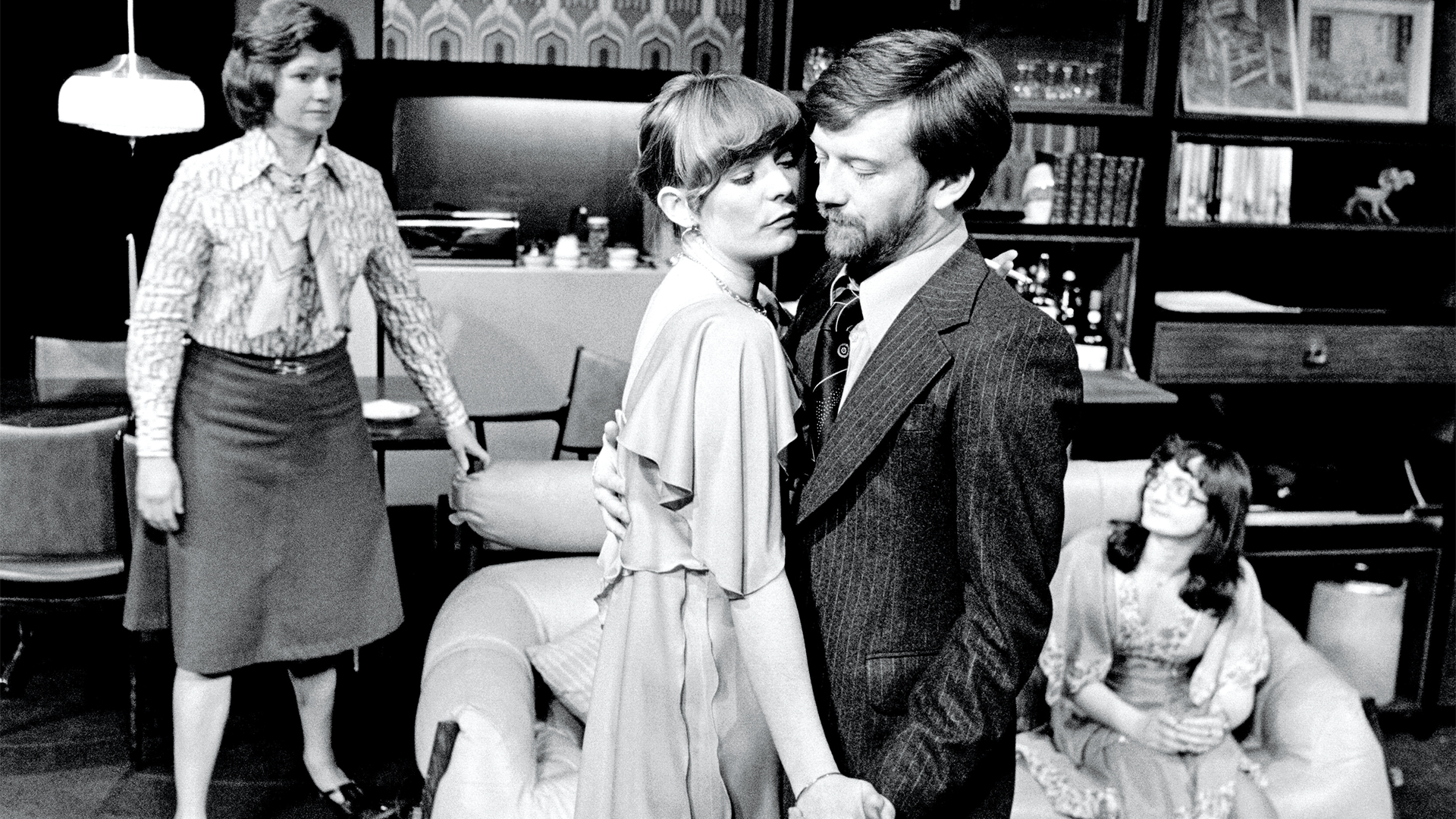
Abigail’s Party: the ultimate Seventies ‘cringe’ (from left) Thelma Whiteley, Alison Steadman, John Salthouse and Janine Duvitski. Image: Donald Cooper / Alamy

As fascism hovers, austerity holds its nerve and access to basic resources divides the ‘haves’ from the ‘have nots’, these are not the politest of times. Perhaps it was inevitable that something so polite as hosting people for dinner would start to feel out of sync. At least among those devoted to waging war against the class society – for frying bigger fish, let’s say, than salmon fillets. 

No serious person would claim to be throwing a dinner party. This has probably been the case since Abigail’s Party hit screens in 1977, but Come Dine With Me has maintained hosting as a source of cringe. Where Mike Leigh had to opt for satire as a means of exposing the petty, competitive nature of aspirational entertaining, Channel 4 can now quite comfortably stage the quiet part out loud. It is there to entertain us, not to inspire us to entertain others.

Get the latest news and insight into how the Big Issue magazine is made by signing up for the Inside Big Issue newsletter

Even having people over, as the self-consciously un-snobbish tried to rebrand it, seems to have lost credibility. Having people over, after all, is still what you do when you don’t want to look outside. Left-wingers are supposed to be serving free community meals, bringing dal to grassroots meetings, stirring vegan slop for rallies.

Socialists, on the side of working people, are not supposed to ‘chatter’; relaxing in cosy settings like the class that rules from their homes – their grace-and-favour homes, their holiday homes, their London pieds-à-terre. Whether you’re already powerful, or desperately striving for status, playing the gracious host can often expose a person to hatred. Taking your guests on a tour of your stately home before discussing the cost of living? Hardly endearing politics. Nibbles? Napkins? Tiramisu? What a sad little life, Jane.  

In other words, now is not the time for nice things, or so we have come to feel. The sentiment is not without its theoretical forebears. In 1944, German philosopher Theodor Adorno wrote that every mark of comfort in one’s home was paid for with a “betrayal of cognition”. To content oneself with domestic “achievements” – nice interiors, serving good wine – was a form of self-delusion as to why you could afford it.

Advertising helps fund Big Issue’s mission to end poverty

In 1979, French sociologist Pierre Bourdieu proposed that having people for dinner was less a delusion than a ploy – a strategy, as it were, for ritualising the things that gave you class. Can it be that today, too, ethics means not being at home in one’s own house? 

Read more:

In a recent guide to entertaining, food writer Ruby Tandoh suggests not. For Tandoh, the problem is less the fact of competitive dinner-hosting than the bourgeoisie’s dishonesty about it. It is all about the host, she writes, and this is fine. She models this upfrontness herself. She tells how after presenting an elaborate French dessert to a candlelit table of friends, “Everybody was delighted and I was delighted, too – not because people were pleased, but because I was the one who had pleased them.”

I admire Tandoh’s frankness, but wonder if hosting must be doomed to this role. Can we not sustain our resistance to the spirit of competitive individualist display, while also allowing ourselves the quite basic pleasure of feeding our friends at home? 

Adorno’s point about an ethics of discomfort was not that this solved the problem, but rather that it pointed to the unsustainable nature of the political status quo. “There is no right life in the wrong one,” he wrote – no satisfactory way to be when the conditions of existence are so unjust in general. While it is ugly, then, to imagine that life begins and ends in your home, it is also pointless to feel bad about the fact that others must suffer for your comfort if you aren’t going to do anything about it.

Chairman Mao may have insisted that “revolution is not a dinner party”, but what is the revolution for if not the housing and time and resources it takes to make a big, delicious dinner? 

If the left is to achieve its aim of nice things for all in a world fuelled by generous dispositions, it might not be such a terrible plan to familiarise ourselves with niceness. If dinner parties are defined by the care involved in laying the table, planning the food and lighting the room, this was never what made them lame. What made them lame was the spirit of smugness, that we have come, by mistake, to view as inextricable from hosting.

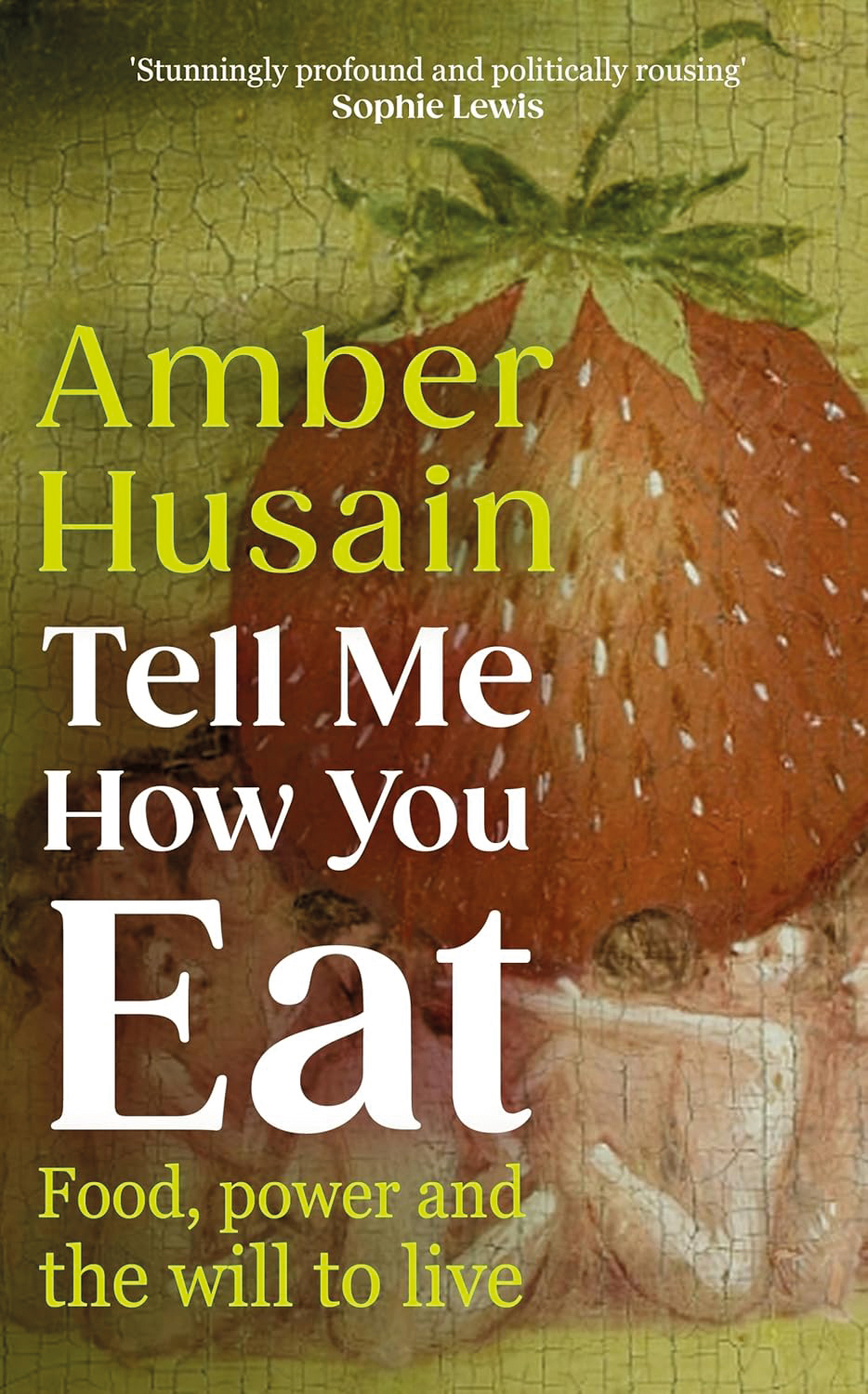
Tell Me How You Eat: Food, Power and the Will to Live by Amber Husain is out on 5 February (Hutchinson Heinemann, £18.99). You can buy it from the Big Issue shop on bookshop.org, which helps to support Big Issue and independent bookshops.

Do you have a story to tell or opinions to share about this? Get in touch and tell us more

Change a vendor’s life this winter.

Buy from your local Big Issue vendor every week – and always take the magazine. It’s how vendors earn with dignity and how we fund our work to end poverty.

You can also support online with a vendor support kit or a magazine subscription. Thank you for standing with Big Issue vendors.

Advertising helps fund Big Issue’s mission to end poverty

GIVE A GIFT THAT CHANGES A VENDOR'S LIFE THIS WINTER 🎁

For £36.99, help a vendor stay warm, earn an extra £520, and build a better future.
Grant, vendor

Recommended for you

View all
How marmalade spread across the world
Food

How marmalade spread across the world

Young people turning to social media over NHS for nutrition and diet advice: 'Social media is trumping doctors'
A stock image of a person filming social media food content.
Health

Young people turning to social media over NHS for nutrition and diet advice: 'Social media is trumping doctors'

27 places where kids can eat for free or £1 over the Christmas holiday
kids eat free/ easter holidays
Kids eat free

27 places where kids can eat for free or £1 over the Christmas holiday

Inside the Millennium Seed Bank, our biological safety net in a changing world
Food

Inside the Millennium Seed Bank, our biological safety net in a changing world